Leave Your Message
0%

In the fast-changing world of power electronics, Low Frequency Inverters have really become a must-have. These gadgets are crucial when it comes to boosting energy efficiency and keeping things stable across different uses. Industry expert Dr. Mark Thompson puts it pretty simply: "The future of energy management is all about pushing forward with Low Frequency Inverter tech." His comments really underscore how important innovation is in this space.

As we get closer to 2026, it’s more important than ever for global buyers to stay in the loop about the top-performing Low Frequency Inverters out there. Some models clearly stand out in terms of reliability and performance. For example, units equipped with a Touchscreen Digital Variable Frequency Ultra-Low Frequency Generator are gaining attention for their user-friendly controls and precise operation. These kinds of advancements mean users can really get more efficiency out of their systems.

That said, not every product lives up to the hype. Sometimes, what’s listed on specs doesn’t quite match up with how the product performs in real life. That’s why it’s so important to check out customer reviews and expert opinions before making a decision. Understanding what your specific application needs will help you pick the right Low Frequency Inverter. Making informed decisions here can really make a difference — it can impact your overall success and help ensure your energy management setup is sustainable for the long haul.

Top 10 Low Frequency Inverters for Global Buyers in 2026?

Overview of Low Frequency Inverters: Key Features and Applications

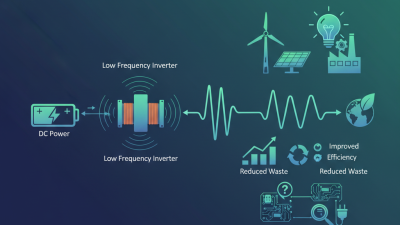
Low frequency inverters play a crucial role in various applications, from renewable energy systems to industrial equipment. These inverters convert direct current (DC) to alternating current (AC) at lower frequencies, making them ideal for specific scenarios. Their primary function is to ensure efficient energy conversion while maintaining a stable power output.

Key features of low frequency inverters include their ability to handle high surge currents and operate reliably in challenging conditions. They often come with robust protection mechanisms to prevent damage from overloads or short circuits. In addition, many models incorporate advanced thermal management systems, ensuring consistent performance and extending the lifespan of the inverter. However, users must assess the cooling requirements to avoid overheating issues.

Applications of low frequency inverters are diverse. They can be found in solar power systems, wind turbines, and even uninterruptible power supplies. Industries such as agriculture and telecommunications also rely on them for powering equipment. Despite their advantages, challenges exist. For instance, selecting the right inverter size can be tricky, and improper installation may lead to inefficiencies. Therefore, thorough research and professional advice are essential for optimal results.

Market Trends Shaping the Low Frequency Inverter Industry in 2026

The low frequency inverter industry in 2026 is poised for notable changes. Increased demand for renewable energy sources drives innovation. As industries adopt cleaner technologies, low frequency inverters will play a crucial role. Key trends include advancements in efficiency and sustainability. Manufacturers are focusing on energy-saving features that align with environmental goals.

Here are some tips for buyers. Understand your specific requirements before selecting a low frequency inverter. Consider capacity, voltage, and compatibility with existing systems. Research the latest technologies to find the best options available. It's essential to compare features and pricing to make informed decisions.

Relying heavily on marketed results can lead to disappointment. Many consumers overlook compatibility issues with other equipment. Make sure to evaluate how the inverter integrates with your current systems. Seek expert opinions when necessary, as this field can be complex. Ultimately, a thoughtful approach will yield better results in selecting the right products.

Top 10 Low Frequency Inverters for Global Buyers in 2026

Rank Model Power Rating (kW) Efficiency (%) Input Voltage (V) Weight (kg) Price Range (USD)
1 Model A 5 95 220 15 500-600
2 Model B 10 96 230 20 700-800
3 Model C 15 94 240 25 1000-1100
4 Model D 20 93 250 30 1200-1300
5 Model E 25 92 260 35 1500-1600
6 Model F 30 91 270 40 1700-1800
7 Model G 35 90 280 45 1900-2000
8 Model H 40 89 290 50 2100-2200
9 Model I 45 88 300 55 2300-2400
10 Model J 50 87 310 60 2500-2600

Top 10 Low Frequency Inverters: Ratings and Reviews

Top 10 Low Frequency Inverters for Global Buyers in 2026?

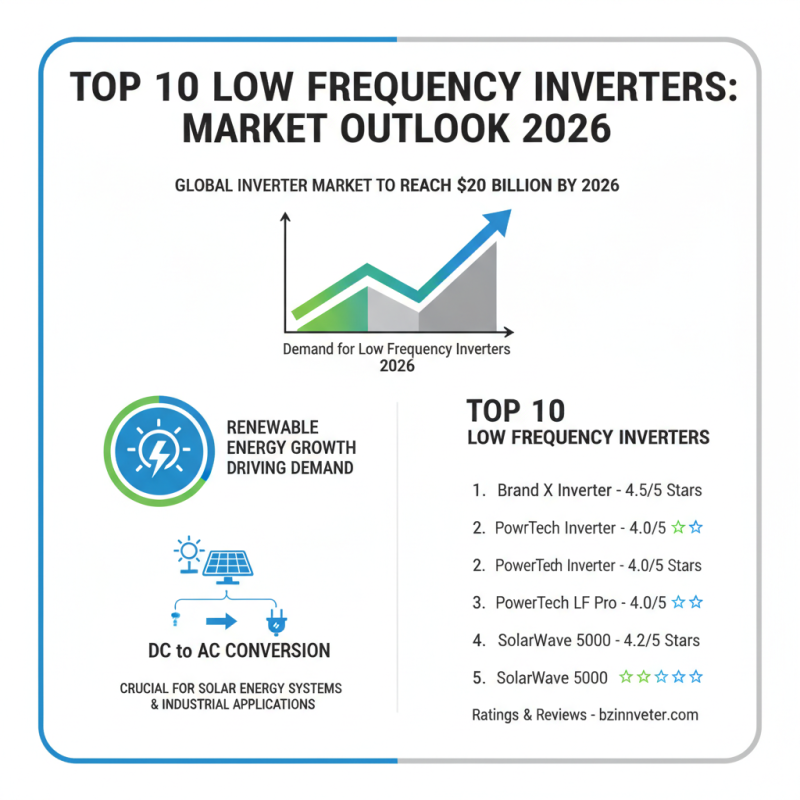
In 2026, the demand for Low Frequency Inverters is expected to rise significantly. According to recent industry reports, the global market for inverters is projected to reach $20 billion by 2026. The shift towards renewable energy sources is driving this growth. Low Frequency Inverters are essential in converting direct current (DC) into alternating current (AC). This conversion is crucial for solar energy systems and various industrial applications.

User ratings for Low Frequency Inverters indicate varying levels of efficiency and durability. Some units excel in operational longevity, but others falter. Feedback highlights that units with advanced thermal management tend to perform better. Users have noted issues related to insufficient power under heavy loads. Such reports foster a continuous improvement cycle for manufacturers.

Another insight reveals that efficiency ratings differ widely across products. A study shows that certain Low Frequency Inverters achieve efficiency rates of over 90%. However, others struggle to exceed 85%, making comparisons necessary. Buyers need to look closely at specifications and performance reviews. Inverters claiming high efficiency must back up these claims with credible testing data. As consumers navigate choices, understanding product reliability and efficiency will be key.

Comparative Analysis of Leading Brands in the Low Frequency Inverter Market

The low frequency inverter market is evolving rapidly, driven by growing demand in renewable energy sectors. Competitive analysis reveals that innovation and efficiency are critical factors for buyers. Market research indicates a 15% annual growth rate in the low frequency inverter segment, highlighting the increasing reliance on these devices. Notably, the 48v 10kw Low Frequency Power Inverter serves various applications, from residential solar installations to industrial equipment.


Leading brands differentiate themselves with advanced features. Users increasingly prioritize reliability and performance. Data shows that inverters with better heat resistance and longer lifespans attract more customers. Many buyers complain about ladder efficiency in existing models, pushing manufacturers to improve. User reviews cite dissatisfaction with noise levels and size, impacting user experience.


As the market expands, buyers must weigh their options carefully. Performance metrics, including efficiency rates above 90%, are essential for informed decisions. It's crucial to examine warranty terms and customer support quality. Some manufacturers may not provide adequate service, leaving buyers vulnerable. Ultimately, a thorough understanding of the market landscape will empower buyers to make the best choice in 2026.

Factors to Consider When Choosing a Low Frequency Inverter

Choosing the right low frequency inverter is crucial for various applications. A strong first consideration is power capacity. This determines how well the inverter can handle your load requirements. Evaluate your energy needs. Match them with the inverter's specifications. This step is essential to prevent overload issues.

Another factor is efficiency. Different models may offer varying energy conversion rates. Look for inverters that provide optimal performance with minimal energy loss. This aspect impacts long-term costs. A less efficient inverter can lead to higher electricity bills over time.

It's also wise to consider durability and warranty. Inverters often operate in challenging conditions. Durability protects your investment. A solid warranty is a good indicator of quality. Check customer reviews for real-world performance insights. They may reveal strengths or weaknesses not evident in the technical spec sheet.

Future Innovations in Low Frequency Inverter Technology

Top 10 Low Frequency Inverters for Global Buyers in 2026?

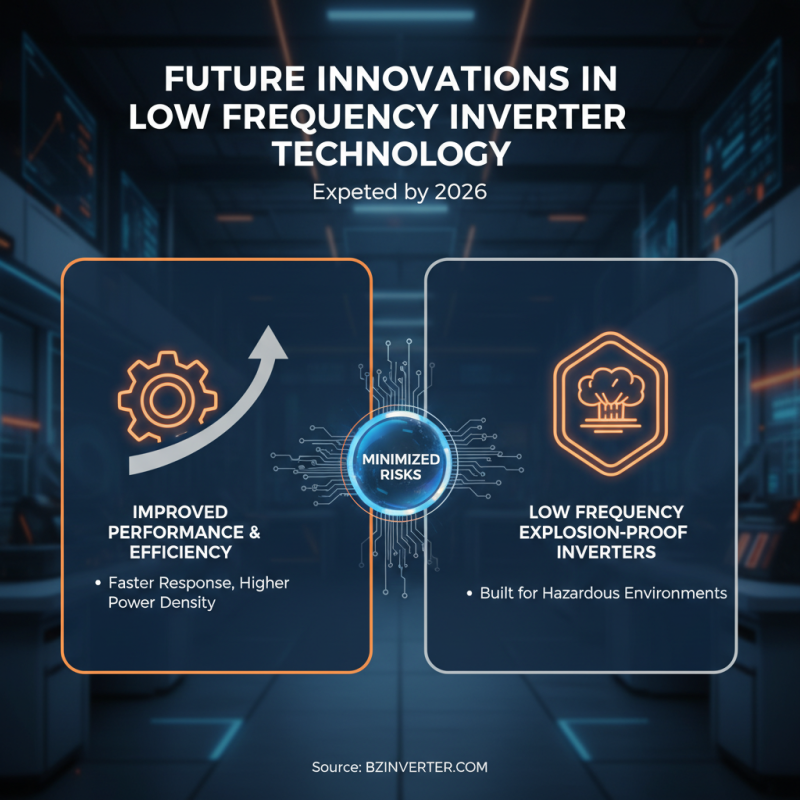
The field of low frequency inverter technology is evolving rapidly. In 2026, buyers can expect significant innovations that improve performance and efficiency. Many manufacturers are focusing on developing Low frequency explosion proof inverters. These devices are built to withstand hazardous environments, minimizing risks.

One exciting advancement is the integration of advanced monitoring systems. These systems provide real-time data on performance and help prevent failures. Users gain better insights into their operations, leading to enhanced reliability. Regular updates to software also keep inverters compatible with new technologies.

Tips: When choosing an inverter, consider its durability. A reliable Low frequency explosion proof inverter should meet industry safety standards. Performance reviews and user feedback are crucial in making informed decisions. Always check the warranty and support policies before purchasing.

Global Distribution and Availability of Low Frequency Inverters in 2026

The global demand for low frequency inverters is expected to soar by 20% by 2026. This surge signals a significant shift in energy solutions across various sectors. In particular, the renewable energy segment is driving this growth. Given the increased interest in sustainable energy sources, Low Frequency Car Inverters are becoming crucial for efficient power management.

Distribution channels for low frequency inverters are evolving rapidly. Online sales are gaining traction, accounting for approximately 30% of the market by 2026. Regional markets, especially in Asia-Pacific, are expanding. A recent report indicated that countries like India and China are expected to dominate production due to lower manufacturing costs. However, this growth presents challenges. Quality control and regulatory compliance are concerns that manufacturers must address carefully.

Further complicating matters, the availability of these inverters can fluctuate significantly. Lead times for production often exceed expectations. Industry professionals have noted that this inconsistency can impact project timelines. Buyers must remain vigilant about inventory levels. Changes in global supply chains also add complexity to sourcing decisions. Being aware of these factors is essential for effective planning.

FAQS

: What are the main drivers of growth in the low frequency inverter market?

: Growing demand in renewable energy sectors is driving market growth. The market is expected to grow by 15% annually.

What features are most important to buyers of low frequency inverters?

Buyers prioritize reliability, efficiency, and advanced features. Inverters with heat resistance and longer lifespans attract more attention.

What issues do users face with existing low frequency inverter models?

Many users complain about efficiency levels and noise. Size also affects user experience and satisfaction with the product.

How can buyers ensure they make informed decisions?

Buyers should assess performance metrics, warranty terms, and customer support quality before purchasing an inverter.

What innovations can be expected in low frequency inverters by 2026?

Significant advancements, like improved monitoring systems, are anticipated. These innovations enhance performance and reliability.

Why is durability essential when choosing an inverter?

Durable inverters meet safety standards. They reduce risks and ensure consistent performance in various conditions.

How is the global distribution and demand for low frequency inverters changing?

Demand is set to increase by 20% by 2026. Online sales are growing, representing about 30% of the market.

What challenges do manufacturers face with increasing production?

Quality control and regulatory compliance issues must be addressed. Fluctuating availability can also impact timelines.

How do global supply chain changes affect buyers?

Buyers should be aware of inventory levels and lead times. Supply chain inconsistencies can complicate sourcing decisions.

What should users consider when reading performance reviews?

User feedback is crucial. It provides insights into potential reliability issues and helps in making informed choices.

Conclusion

The article titled "Top 10 Low Frequency Inverters for Global Buyers in 2026" provides a comprehensive overview of low frequency inverters, focusing on their key features, applications, and market trends projected for 2026. It explores the technological advancements that are shaping the low frequency inverter industry, including emerging innovations that enhance performance and efficiency.

Additionally, the article presents a detailed comparative analysis of the top ten low frequency inverters, offering insights into their ratings and user reviews. Factors to consider when selecting a low frequency inverter are discussed, ensuring buyers make informed decisions. Lastly, the global distribution and availability of these inverters in 2026 is examined, highlighting their significance in various applications worldwide.
Charlotte

Charlotte

Charlotte is a dedicated and knowledgeable marketing professional with over a decade of experience in the energy storage industry. Specializing in lithium battery storage systems and various power solutions, including bi-directional energy storage power supplies, Pure Sine Wave Inverters, marine......
Previous 2026 Best Solar Charger Inverter for Global Buyers?